Dental Hygiene

Do you want a career that helps people stay healthy and confident in their smiles? The Dental Hygiene program prepares you for a rewarding healthcare career focused on prevention, patient care, and education.

Why Choose Dental Hygiene

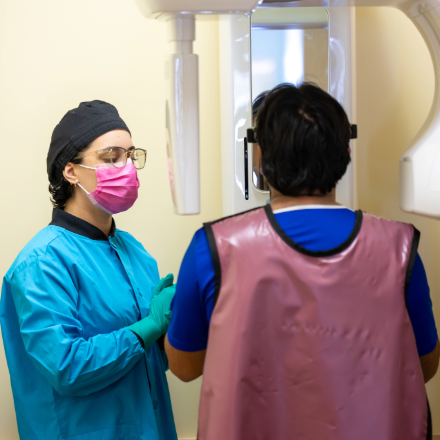
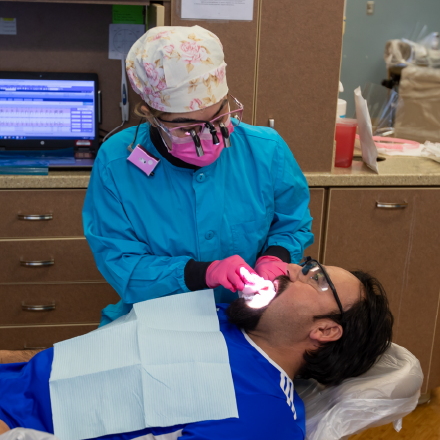
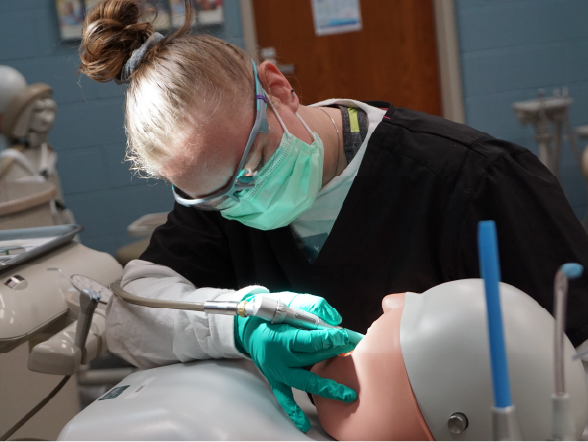
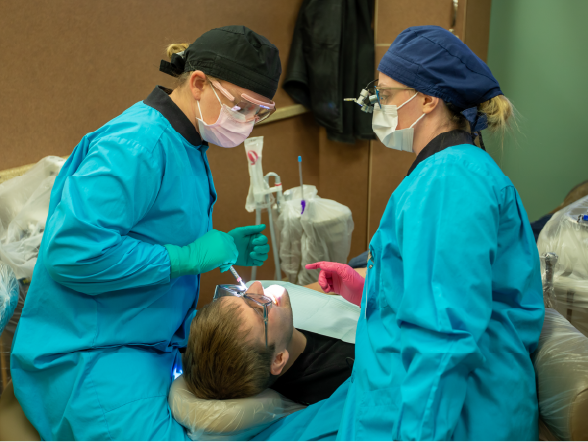
The Dental Hygiene program prepares you for employment in a variety of clinical settings. You learn essential skills such as scaling and polishing teeth, taking dental X-rays, performing oral exams, and educating patients about oral health.

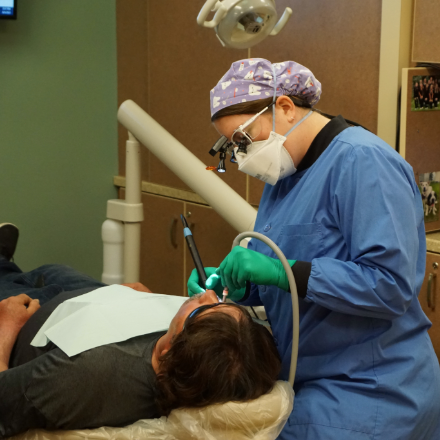
Students gain hands-on experience in an on-campus clinic where services are provided to the public under the supervision of licensed dentists and dental hygienists. Graduates are eligible to take national and regional exams required to become a Registered Dental Hygienist (R.D.H.).

At a Glance

Locations

Hastings Campus

Awards Offered

Associate Degree

Students In Motion

Program Options

Clinical Excellence. Community Impact.

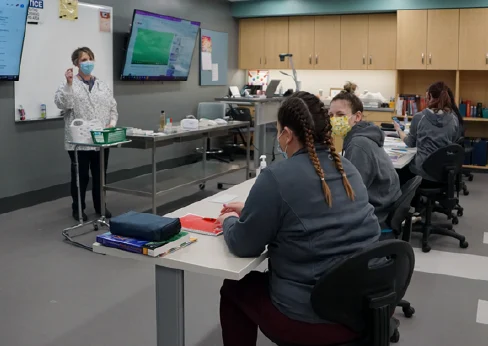
The Dental Hygiene program combines hands-on clinical training with real patient care experience. You will learn in a fully functioning clinic, participate in community outreach, and receive personalized instruction from experienced faculty while building connections with employers across the region.

2 Years: Associate Degree

Dental Hygiene AAS Degree

Graduates of the Dental Hygiene program are eligible to take national and regional board exams. Passing these exams allows you to become a Registered Dental Hygienist (R.D.H.), which is required to work in a dental office or clinic.

View Dental Hygiene AAS Degree Details

More Information

Dental Hygiene Program Specific Criteria for Admission

  1. Applicant must have on file a completed Central Community College application.
  2. The State of Nebraska Regulations Governing the Practice of Dentistry and Dental Hygiene requires that the candidate for dental hygiene should possess good moral character, sound mental health, dependable work history, general accountability, and trustworthiness. Applicants who have criminal records, substance abuse problems or mental health problems that interfere with the safe practice of dental hygiene may be ineligible for licensure. Applicants for licensure in Nebraska are required to be U.S. Citizens or show proof of current immigrations status. Licensure requirements for other states may vary. Criminal convictions or documented history of abuse may prevent students from participating in clinical experiences.
  3. A student accepted into the Dental Hygiene program must be a high school graduate or have passed a standard equivalency test.A high school transcript or copy of the equivalent certificate must be supplied. Contact the Student Services office if you need information about the standard equivalency test.
  4. Completion of high school or college algebra, chemistry, and biology, or the equivalent is required.
  5. A minimum of the following college-level prerequisite courses are required (These courses must be all be completed in order to apply to the program):
    • Anatomy and Physiology (8 hours) [Biology 1010 is a pre-requisite for BIOS 2250 at Central Community College]
    • Microbiology (4 credit hours)
    • Expository Composition (3 credit hours)
    • Introduction to Psychology (3 credit hours)
    • Introduction to Sociology (3 credit hours)
  6. A cumulative G.P.A. of 3.0 in the prerequisite courses is required, with no prerequisite courses having a grade below “C” (2.0).  There is a seven (7) year minimum on science courses.
  7. Applicants may submit either ACT, ACCUPLACER, NEXT GEN, or NWEA MAP scores. The ACT may be waived if a minimum of 12 science college credits (transferable courses) with a grade of 3.0 or better in course is completed.
    • ACT TEST:
      • Composite ≥ 19
      • Math ≥ 19
      • All other areas ≥ 18
    • NEXT GEN:
      • Reading ≥ 263
      • Writing ≥ 263
      • Math ≥ 246
    • MAPS:
      • Reading ≥ 223
      • Language ≥ 223
      • Math ≥ 240
    • Accuplacer Placement Test:
      • Reading ≥ 74
      • Sent-Skills ≥ 84
      • Elem Algebra ≥ 57
    • The ACT as well as other tests may be waived if a minimum of 12 science college credits (transferable courses) with a grade of 3.0 or better in each course is completed.
  8. Applicants must attend a Dental Day Admissions session. Please contact the Admissions  Office for this session.
  9. Each applicant to the Dental Hygiene Program must provide written proof of forty (40 hours) observation time in a dental facility.  Those applicants having dental office work experience need only to obtain written verification of employment.
  10. Hepatitis B vaccine, evidence of being tuberculin-free, and a current CPR card are required for admittance into the program.  An applicant is also encouraged to be immunized against infectious diseases.
  11. Bloodborne Pathogens Policy
    • Central Community College is committed to addressing issues related to bloodborne pathogens, such as Human Immunodeficiency Virus (HIV), Hepatitis B Virus (HBV) and Hepatitis C Virus (HCV), in a spirit of cooperation, compassion, flexibility, and sensitivity to individual needs as well as to community welfare.  The purpose of this policy is to minimize the risk of transmission of a bloodborne pathogen from an infected student to a patient. In accordance with CCC policy, health education programs are responsible for ensuring that its students do not have any physical impairments resulting from infection by bloodborne pathogens that would interfere with the performance of their clinical responsibilities or create a health risk for patients.
  12. Once applicants have completed their requirements, which include completion of prerequisites courses with a 3.0, testing scores requirements, current CPR, immunization record, and 40 hours of observation, they should contact the program director in regards to applying to the program. Once an applicant has met all of the required admission criteria, the applicant will be put on a waiting list for the admission to the dental hygiene program.

One of the admissions requirements for the Central Community College Dental Hygiene Program is a minimum of forty (40) hours of observation in a dental office. The goal of this requirement in a dental office is to realistically acquaint you with the profession of dental hygiene. It is felt this is a valuable and necessary avenue of career exploration. This requirement is meant to assist you in affirming your commitment to your education and the profession. Therefore, you are strongly encouraged to complete your observation in an office where a dental hygienist is employed.

During your observation the following criteria should be met. Use this criteria as a checklist as you complete your dental office observation requirement.

Criteria Checklist for Office Observation

  1. Observe the dental hygienist/dentist performing the following procedures and discuss each with him/her:
    • Recording and evaluating a patient medical/dental history
    • Examination of the oral cavity
    • Scaling and polishing teeth (oral prophylaxis)
    • Application of topical fluoride to teeth
    • Exposing, developing, and mounting x-rays (radiographs)
    • Patient education
  2. Observe office personnel perform sterilization and disinfection procedures and discuss reasons for performing these procedures.
  3. Discuss the need for radiation (x-ray) safety with office personnel. Through questioning, determine precautions taken during x-ray exposure.
  4. Acquaint yourself with the instruments, equipment, and materials utilized by a dental hygienist.
  5. Through observation of and discussion with all office personnel determine duties and responsibilities of the:
    • Dental Hygienist
    • Dentist
    • dental Assistant
    • Receptionist/Office Manager
    • Dental Laboratory Technician
  6. Discuss procedures and reasons for:
    • Recall system
    • Appointment control (scheduling appointments)
    • Inventory
  7. Observe procedures for seating and dismissal of patients.
  8. Observe attire worn by office personnel.
  9. Observe interaction among office personnel and question them regarding their philosophies on teamwork.
  10. Observe interaction between office personnel and patients. Discuss with office staff their philosophies regarding patient interaction.

As a result of your observation and questioning of and discussion with office personnel, you will be able to complete the following:

  1. List the roles and responsibilities of a dental hygienist, dentist, dental assistant, and other office personnel.
  2. Explain the need for sterilization and disinfection in the dental office.
  3. Explain the need for radiation safety.
  4. Define the duties a dental hygienist may perform.
  5. Develop an awareness of and appreciation for the interactions among office personnel.
  6. Develop an awareness of and appreciation for the interactions between office personnel and patents.
  7. Begin to develop a philosophy regarding “professionalism”.
  8. Discuss reasons why recall systems, appointment control, and inventory are important to office operations.

PROGRAM MISSION

The dental hygiene program enables graduates to become academically eligible for national and regional board exams that are required to become a Registered Dental Hygienist (R.D.H.). An R.D.H. license is required in Nebraska to practice in a dental office or clinic. The program offers continuing education for practicing dental professionals and is active in providing community services.

VISION STATEMENT

The Dental Hygiene program will provide students with a quality educational program using state-of-art technology and equipment. Continuous quality improvement principles, with on-going support from the dental community will be utilized to assure the program exceeds the standards set forth by the Commission on Dental Accreditation.

We Value:

  • Student success
  • On-going relationships with graduates as lifelong learners and supporters of the program.
  • Providing articulation agreements with senior institutions for graduates to pursue higher degrees.
  • Providing continuing education to dental professionals for licensure renewal.
  • Partnering with high schools that provide a career pathway for health careers.
  • Collaboration with other dental hygiene programs, CCC health programs, and employers.
  • Maintaining professional relationships with clinical sites.
  • Providing professional development opportunities for faculty and staff.
  • Providing opportunities for leadership development and professional contacts for students through SADHA.

DENTAL HYGIENE PROGRAM GOALS

  • Use state-of-the art equipment, software, and curriculum in an attractive, safe environment that is well maintained and reflects a professional work environment.
  • Actively recruit qualified applicants to the program.
    Provide articulation agreements with senior institutions to care for individuals who are otherwise unable to receive dental care.
  • Through the student hygiene clinic provide access to care for individuals who are otherwise unable to receive dental care.
  • Provide professional development opportunities for faculty and staff.
  • Monitor possible expanded functions for dental hygienists.
  • Improve communications between students and faculty members.

STUDENT LEARNING OUTCOMES

  1. Apply the ethical issues of dental hygiene practice.
  2. Acquire and synthesize information in a critical, scientific, and effective manner.
  3. Participate in health promotion and disease prevention activities for diverse populations.
  4. Systemically collect, analyze, and accurately record base-line data on the general or oral health status and provide evidence based on treatment.

Program Accreditation

The Dental Hygiene Program is accredited by the Commission on Dental Accreditation, a specialized accrediting body recognized by the Commission on Recognition of Postsecondary Accreditation and by the United States Department of Education. Accreditation approval for CCC’s Dental Hygiene Program has been continuous from 1978 until the present. The most recent accreditation site visit was 2023.

Rules and Regulations

Immunizations

A copy of verification of the Hepatitis B vaccine is required for admittance to the dental hygiene program at Central Community College.

Professional Attire & Appearance

Dental hygiene students are required to dress in the program-designated clinic uniform at all times when working in the treatment rooms, laboratory, darkroom, and sterilization center areas of the dental hygiene educational facility and clinic. Other items regarding appearance and attire are detailed in the clinic syllabus.

Protective Eyewear

Students are required to wear protective safety glasses at all times when working in the laboratory and clinic areas of the dental hygiene facility.

Insurance

All students in the Health Sciences programs who provide patient care are required to carry liability insurance purchased through the college. The cost is $12 per year and will be assessed with the first semester of each school year.

Attendance

Dental Hygiene is presently designed as a traditional rather than a self-paced format. The sequential curriculum requires that skills and knowledge to begin each semester are contingent upon satisfactory completion of the previous semester. Since the curriculum does not provide the opportunity to reschedule the learning experience, it is necessary to structure attendance and set minimum criteria for success.

Because of the dental hygiene program’s strict attendance policy, you must plan to adhere to this policy if you have sick children or must commute from a town outside of Hastings when the weather is unfavorable.

Therefore, minimum criteria for attendance has been established as follows:

  • 85 percent attendance in lecture and laboratory
  • 90 percent attendance in clinic.

You are required to call and notify your advisor/instructor of your absence. Excessive/unexcused absences may result in probation.

Causes for Dismissal

Behavior

All dental hygiene students will be held to the Standards of Behavior set forth in the CCC student handbook.

Academic

All dental hygiene students will be held to the Standards of Progress found in the CCC College catalog.

  1. When can I apply to the program?
    • Applications will be accepted when all pre-requisite courses are completed with a 3.0 GPA and acceptable testing scores or waiver have been attained as well as the 40 hours of observation, current CPR card, and immunization records completion. All of these items should be submitted together. Therefore, there is not deadline for the dental hygiene application.
  2. When should I complete my 40 hours of observation?
    • You should complete the 40 hours of observation in a dental office or facility as soon as possible. This helps you decide if this is what you want to do. It is recommended to observe in several different dental offices or facilities.
  3. How long is the waiting list?
    • The waiting list is approximately two years.
  4. How many students are accepted?
    • Fifteen students are accepted to start the course of study in August of each year.
  5. What should I do while I am on the waiting list?
    • Some students choose to work to save money. Some students choose to complete general education courses needed for a bachelor of science in dental hygiene to be completed at another institution.
  6. Why should I look at continuing my education for a bachelor of science degree in dental hygiene?
    • Dental hygienists work in many capacities beside dental offices: public health dentistry, education, sales, corporate dentistry, hospital dentistry, and research. LB 18 legislation has expanded the practice act to include placing restorations, writing prescriptions, administering nitrous oxide, and adjusting dentures. A bachelor of science degree will allow more opportunities for a dental hygienist.

Program Directory

Dr. Wanda Cloet, DHSC, RDH
Program Director
1-877-222-0780 Ext. 2470
Email Dr. Cloet

Ashley Herringer, RDH, MAE
Full-Time Instructor
1-877-222-0780 Ext. 2477
Email Ashley

Patricia Kirkegaard, RDH, BS
Full-Time Instructor
1-877-222-0780 Ext. 2544
Email Patricia

Program Location

The dental hygiene classroom and clinic are located in the Gausman Building on the Hastings Campus of Central Community College. General studies classes are offered on the Hastings, Grand Island, and Columbus campuses of CCC. Courses are also available in learning centers and online.