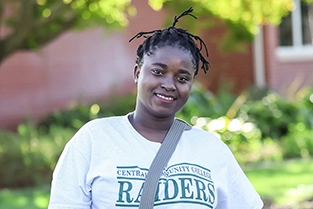
We hope you join Central Community College’s 3C Initiative, our collective efforts across the college to foster positive change and educate for a sustainable environment for everyone. Below you can learn about the college’s Environmental Sustainability Action Plan – our commitment, goals and actions in education, energy, waste, procurement, for our campuses and centers and more – and what we are doing now to make a difference.
Central Community College’s Environmental Sustainability Action Plan (ESAP) spells out our commitment, goals and actions CCC is taking to be a great steward of our environment – for our students, community and the planet.
Explore CCC’s areas of impact and our visionary environmental stewardship commitment and leadership goals below.
Presentations for 2025 season include:
Students 4 Sustainability (S4S) is a student-led organization at CCC dedicated to promoting environmental awareness and sustainable practices. The club’s goal is to empower students to make meaningful changes in their lives and communities through hands-on projects, education, and collaboration.
S4S welcomes any current CCC student interested in sustainability and the environment. Members can join projects and activities that match their interests, with past activities including highway cleanups, planting pollinator gardens, and creating educational displays for the Nebraska State Fair.
As a member of Second Nature’s Climate Leadership Network, Central Community College is dedicated to reducing its greenhouse gas emissions. Strategies include reducing energy consumption, improving energy efficiency and investing in clean and renewable energy sources.


The Kearney Center received the first GreenPower certificate associated with the Kearney Community Solar Project. CCC retains the environmental attributes associated with the purchased carbon free energy shares.
Annually: Increase use of electric charging stations on each campus and the Kearney Center by 10 percent.
By 2028: Each campus will be carbon neutral in electricity use on campus through local renewable energy projects and power purchase agreements.
Central Community College understands the importance of taking steps to reduce its carbon footprint and protect natural resources through recycling and implementing other policies that will reduce the amount of waste sent to the landfill.
The goal is to develop a culture of mindful students and staff who collaborate to conserve resources through reusing supplies and reducing waste. From the use of post-consumer recycled paper, to expanding its compost project college-wide, CCC envisions a college-wide transformation on waste reduction.
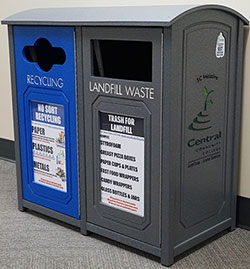
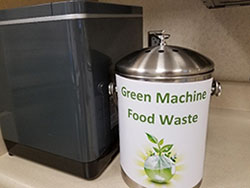
Annually increase FSC-certified and post-consumer waste content of paper by ten percent from 2019-2020 baseline.
By 2026 - divert a minimum of 25 percent of college landfill and construction waste for recycling and reuse.
2026 – Decrease college paper use to achieve a 30 percent reduction from the 2015-16 baseline
A college campus is more than a collection of buildings, parking lots and green spaces; it supports intellectual and social interactions among the people within those spaces. Because of this, the campus landscape should include outdoor use areas that encourage the campus community – students, faculty and staff – to engage with the natural environment and with each other. These outdoor spaces and the experiences they offer, help to support the learning process, giving the campus its sense of place.
The Grand Island Campus sustainable landscape master plan was completed from 2013-2015. Implementing the master plan will improve the health of land, water and everyone on campus. The plan recommends improving soil characteristics, protecting soils during construction and changing plant species and maintenance practices to improve land health. These actions will improve the ability of soils to absorb and release moisture and support increased micronutrient uptake in plants.
Primary beneficiaries of improved land and water health on campus are its staff and students. They will benefit from the reduced use of chemicals and air pollution associated with landscape maintenance. A visually, more diverse campus landscape, served by an interconnected system of walking trails, will encourage people to spend more time outdoors – experiencing the benefits of active lifestyles while being exposed to reduced levels of herbicides and pesticides.
CCC recognizes the important role that pollinators play in our lives. Since 2017, CCC has increased the number of native plants across its campuses and centers through the installation of pollinator gardens on all three campuses.
The pollinator plants are native to Nebraska, making them hardy, low-maintenance and able to endure brisk winters and hot and humid summers. The plants bloom throughout the three seasons to attract pollinator insects.
Annually – Use food waste compost in grounds, culinary, native and pollinator campus gardens.
Annually – Reduce overall pesticide and fertilizer use on each campus through compost and natural pesticides.
2026 – Decrease water usage on all campuses by ten percent.
Central Community College strives to create strong relationships between the college and the different communities it serves. Through community service and the promotion of health projects, CCC has established partnerships with organizations such as local community agencies in the communities of Columbus, Grand Island and Kearney, as well as the Nebraska State Fair.
As part of CCC’s responsibility to care for the health and wellbeing of all, multiple projects and initiatives are targeted to help communities become more walkable and bikable. CCC envisions the opportunity to volunteer in many other community service projects as well as develop a culture of walking and biking in every community it serves.
Annually – The environmental sustainability office volunteers in a minimum of three community service and health projects.
Annually – Organize a bike/walk/outdoor event on each campus.
Annually – Plan America Recycles Day, Earth Month and other sustainability and community events in partnership with faculty, various on-campus departments/staff, local businesses and nonprofits.
Central Community College hosts campus events and collaborates with community partners to share resources and information that promote sustainable practices. Events include Earth Month, the Nebraska State Fair Sustainability Pavilion, America Recycles Day, and a campus-community resilience committee.
Annually – Plan America Recycles Day, Earth Month, pollinator festival and other sustainability and community events in partnership with faculty, various on-campus departments/staff, local businesses and nonprofits.
Annually – Participate in three presentations at local community events or in media outlets.
Annually – Participate in three local community sustainability groups/committees and volunteer at shared planned local events.
Benjamin Newton
Environmental Sustainability Director
308-398-7962
Email Benjamin
Follow us on Facebook